Asgard-XIII
Assisting my old teammembers on the new Asgard-XIII campaign with tracking and recovery.
The ASGARD project gives high school students the chance to plan, build, and launch real scientific experiments into near space using high-altitude balloons, combining teamwork with hands-on learning. For an overview of all launches, see the ASGARD project post.
Even though I had entered university by now, I was still invited by my old junior teammembers to help track the balloon and provide some technical guidance. Driving over 700km to recover the gondola and return it safely to Brussels.
Project
For this year’s edition, the objective was to measure visible, infrared, and ultraviolet radiation in the atmosphere and transmit the results live through the APRS radio protocol, using the radio callsign ON6GMZ-11.
The payload was mounted in the gondola along with the Habduino tracker, sensors, and batteries, all packed carefully to withstand the cold of the stratosphere.
Launch
Launch day started with some unexpected challenges. The first balloon launched by another team unfortunately got stuck in a tree after a short flight above Brussels. Luckily the next balloon, carrying my old school’s payload, was filled with more Helium and managed managed to ascend safely. After take-off, the gondola climbed steadily, drifting east. Above the village of Spa, the balloon changed direction towards the north due to entering a higher air layer with other wind currents. After a short while it started turning east again.
 Launch of the second Asgard-XIII gondola at the Royal Meteorological Institute, Brussels.
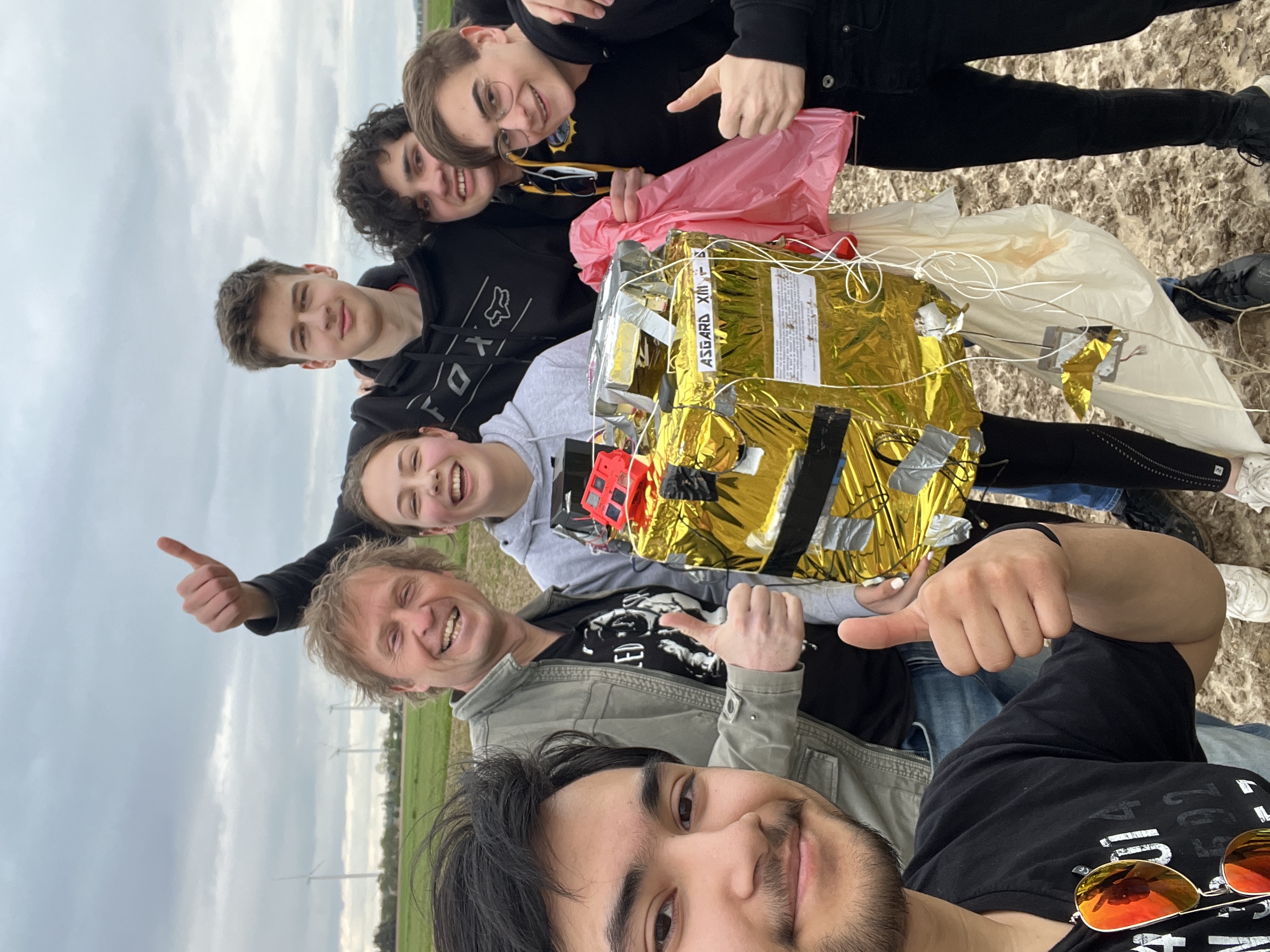
It finally reached a burst altitude of about 33 km, after which it descended rapidly. A rather tense moment occurred when we noticed on the APRS map that the balloon was descending above the “Geilenkirchen” NATO airbase, which made for some nervous laughs in the car.
Luckily it quickly descended into the easterly winds again and making a landing in fields near the small town of Titz, located east of Cologne in Germany. And with the recovery the long drive of nearly 300km into rural Germany had been complete, now the long drive back towards Brussels to give each student team their experiment back to let them prepare their presentation for tomorrow.
After recovering the gondola, we realized we had been driving and tracking for almost five hours straight. To celebrate the recovery we stopped at local pizzeria, where we rested and filled ourselves for the journey back to Brussels.
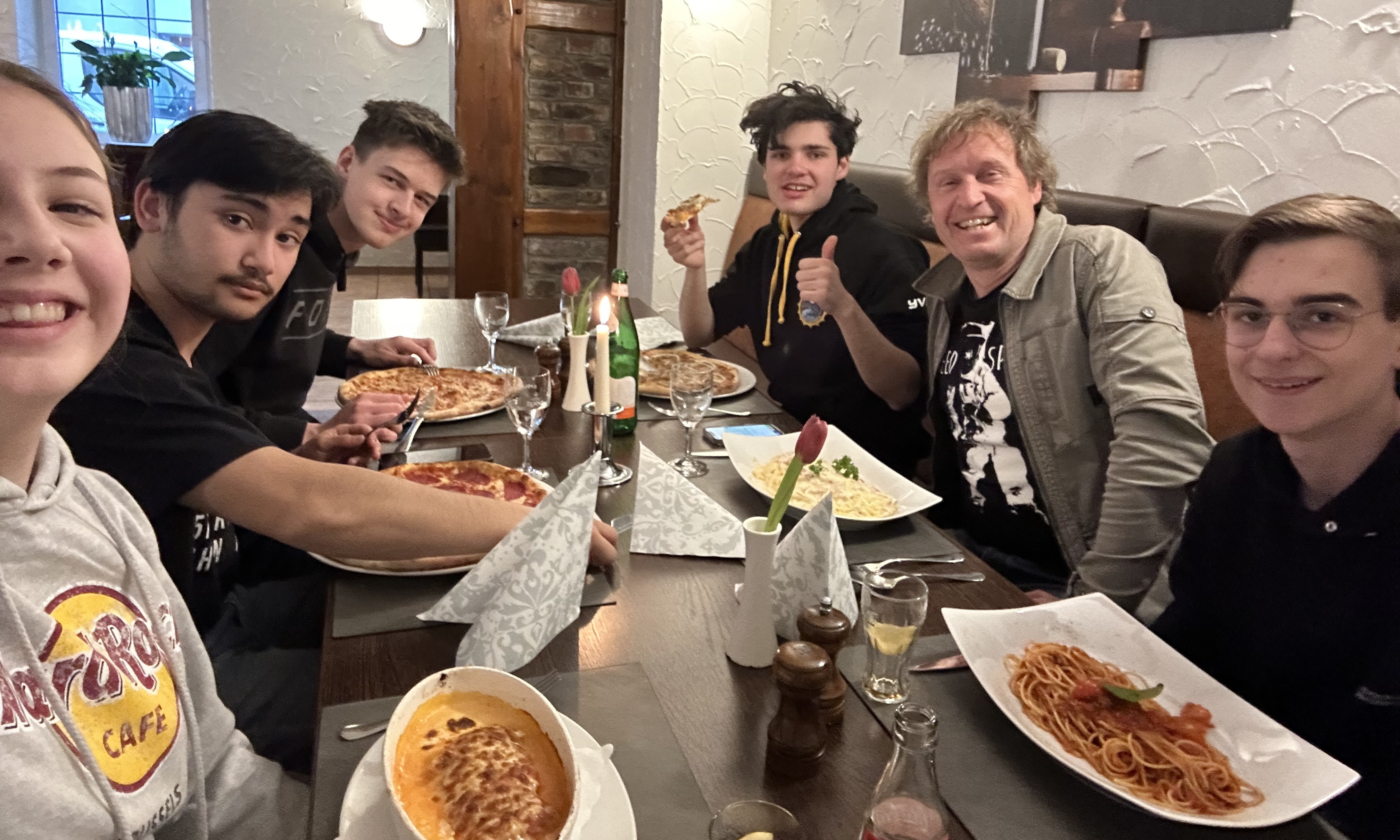 Celebrating the succes recovery at a local pizzeria in Titz, Cologne.
By the time we got back to the hotel, it was around 22:30, after helping a bit with the data processing it was time to get to sleep, as the next day I had to drive back to Hasselt and perform a physics lab at 11:30.
Acknowledgements
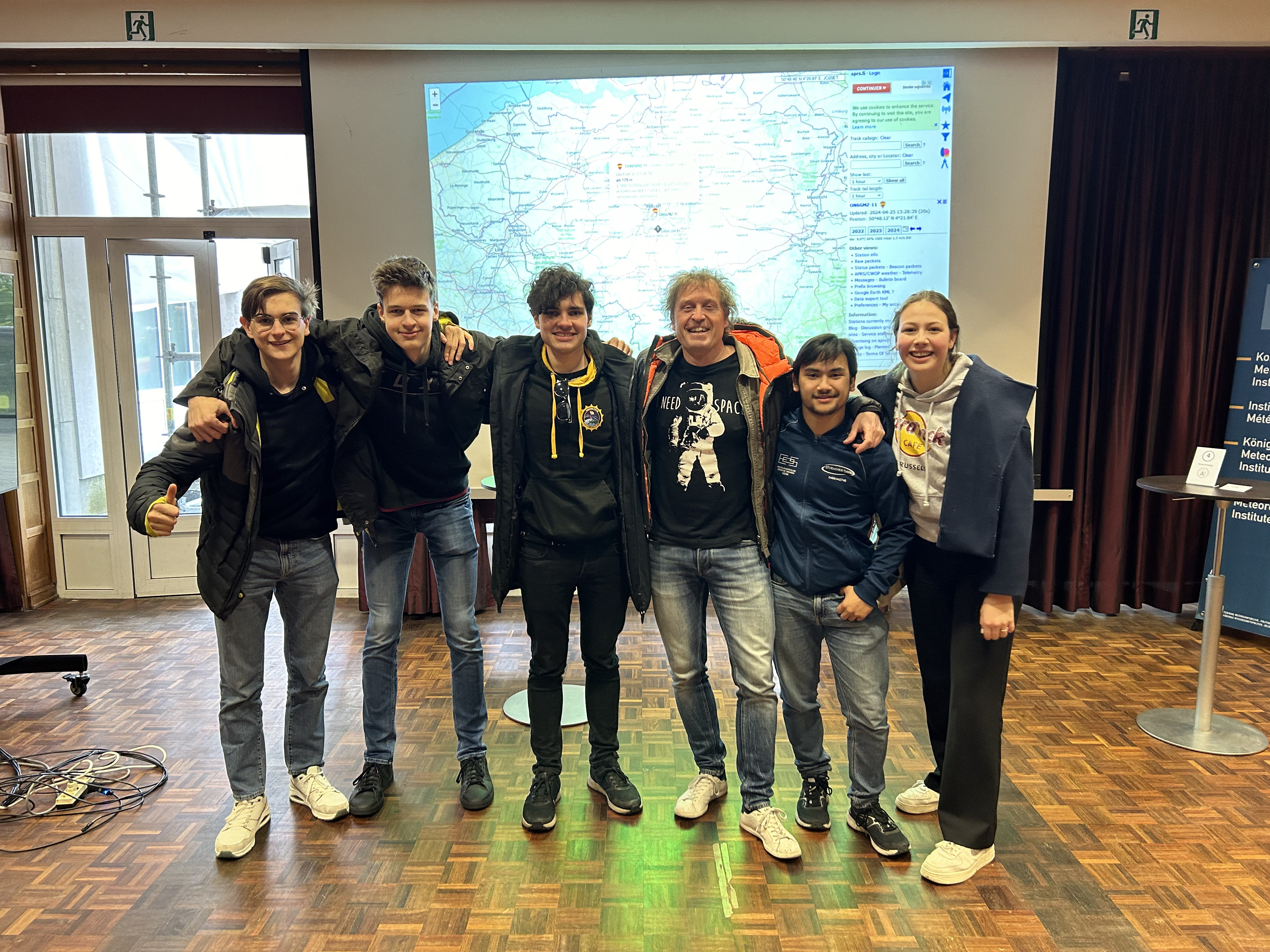
Group photo with my old Asgard teammembers in front of the tracking website. Many thanks to the Royal Meteorological Observatory, ESERO Belgium and Erik de Schrijver for organizing this year’s Asgard campaign. Also thanks to my former teammates, Antonius Dinca, Siebe Penders and Nathan Vanderhallen who invited me again to take part in this great adventure, even if it turned out to be one of the most exhausting but fun editions so far!
Be sure to check out their side of the story, at dirkgeeroms.be.