Asgard-X
A student-built stratospheric experiment measuring UV radiation transmission through skin samples and live telemetry broadcast via RTTY and APRS as part of the Asgard-X campaign.
The ASGARD project gives high school students the chance to plan, build, and launch real scientific experiments into near space using high-altitude balloons, combining teamwork with hands-on learning. For an overview of all launches, see the ASGARD project post.
For several years, I had heard during STEM classes about the tracking experiments that senior students launched on stratospheric balloons. After getting in touch with the physics teacher organising these activities, I was soon invited to join in on the project.
Working together in the midst of the COVID epidemic to develop an experiment was quite the challenge, with frequent lunch breaks and online Zoom meetings spent on writing the proposal, collaborating the design and construction. But in the end we managed to hit all the deadlines and launch our experiment.
Project
Our experiment focused on measuring the passage of ultraviolet (UV) radiation through artificial and authentic human skin samples. The secondary objective was to measure atmospheric data such as altitude, temperature, air pressure, GPS position.
Radio Communication
To transmit live telemetry data, we implemented both RTTY and APRS communication systems. After several successful field tests near the ON0LN repeater in Gruitrode, we confirmed that the APRS packets were correctly received, containing the correct GPS coordinates, battery voltage, and environmental readings.
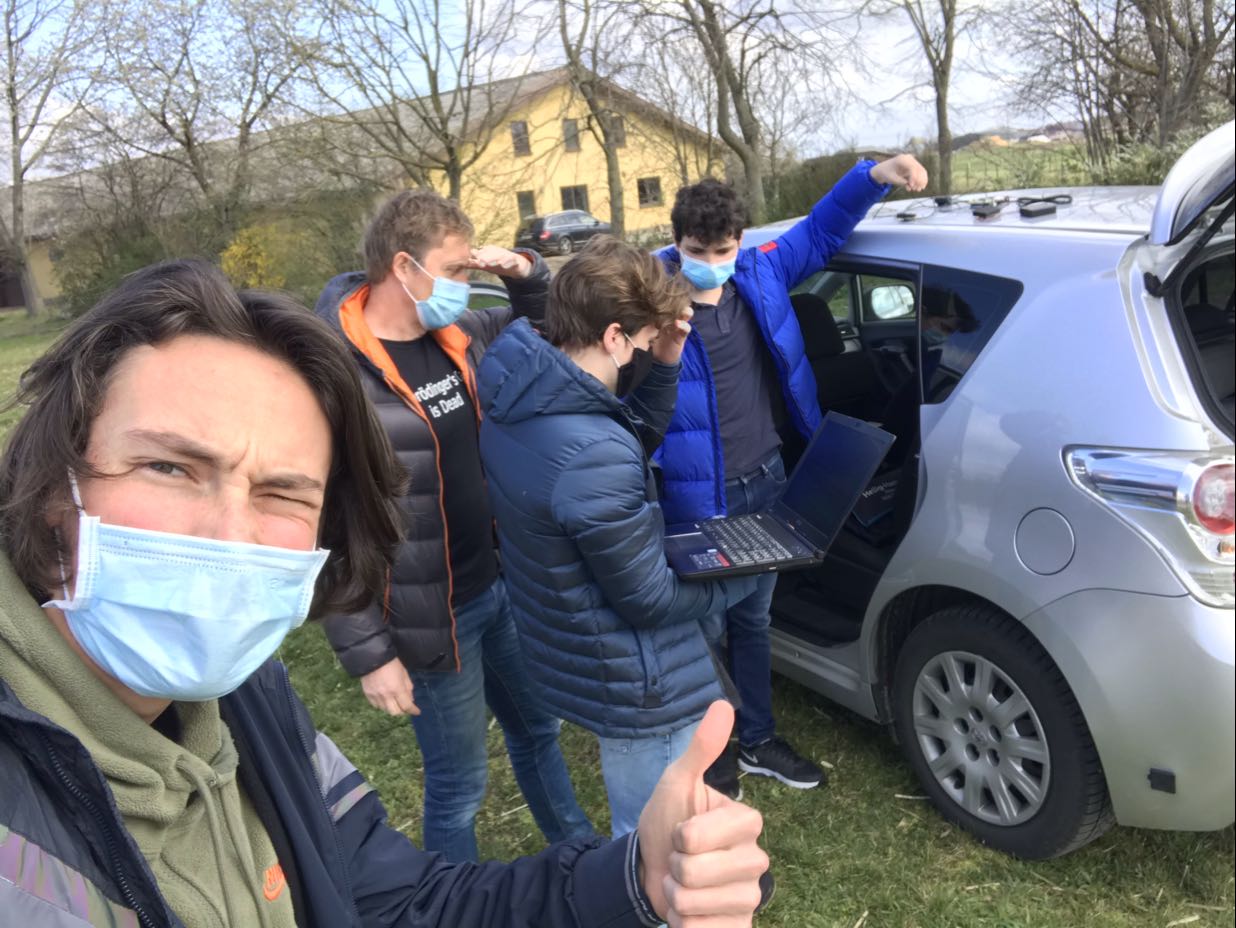 Field work near ON0LN repeater, Gruitrode. (2021-04-02)
Launch
On April 21, the day before the launch, we presented our project to the other participating schools during a virtual conference. The event included lectures by astrophysicist Dominic Bowman on the life cycle of stars and presentations from both Belgian and international student teams.
Launch Day
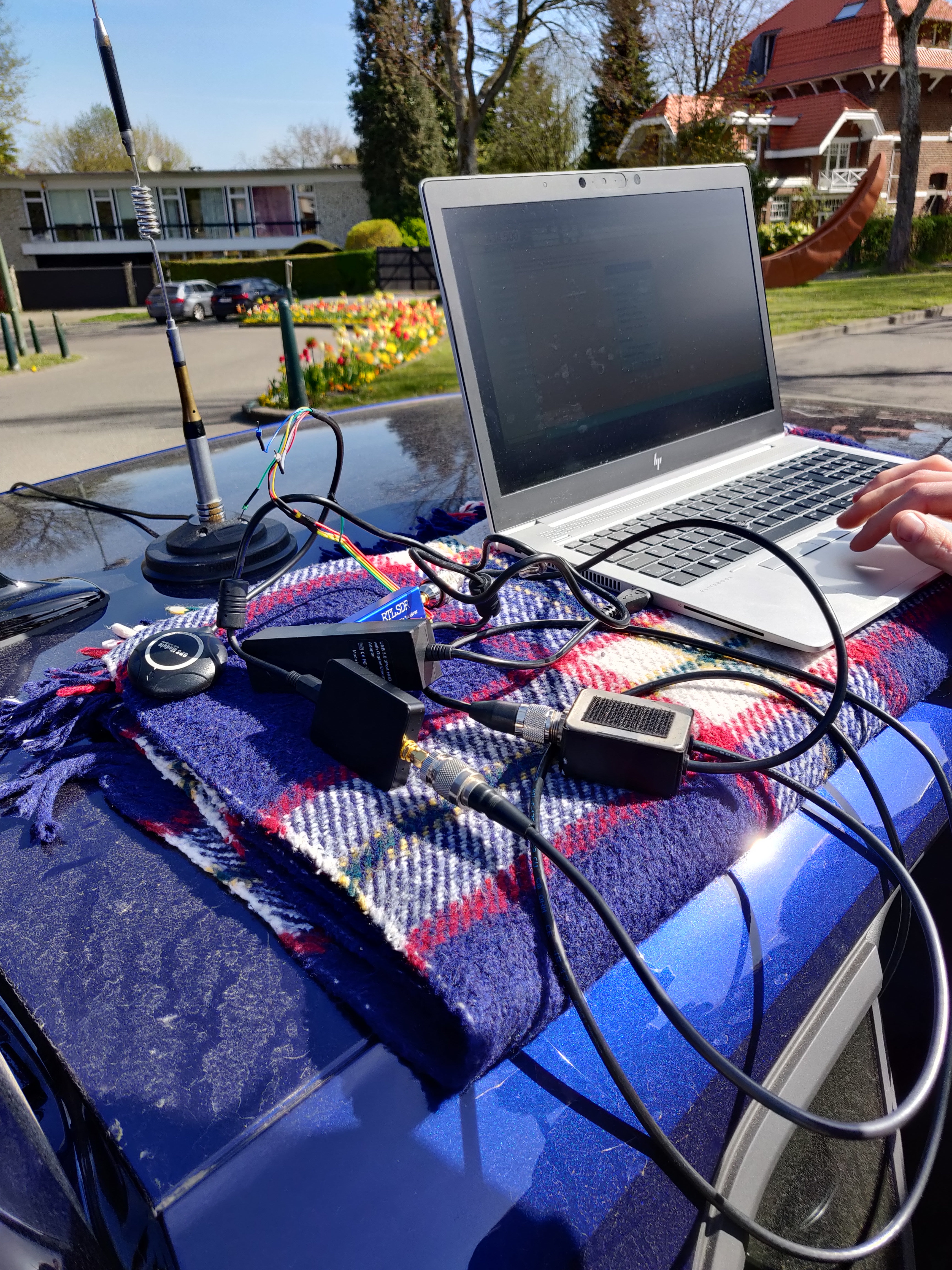
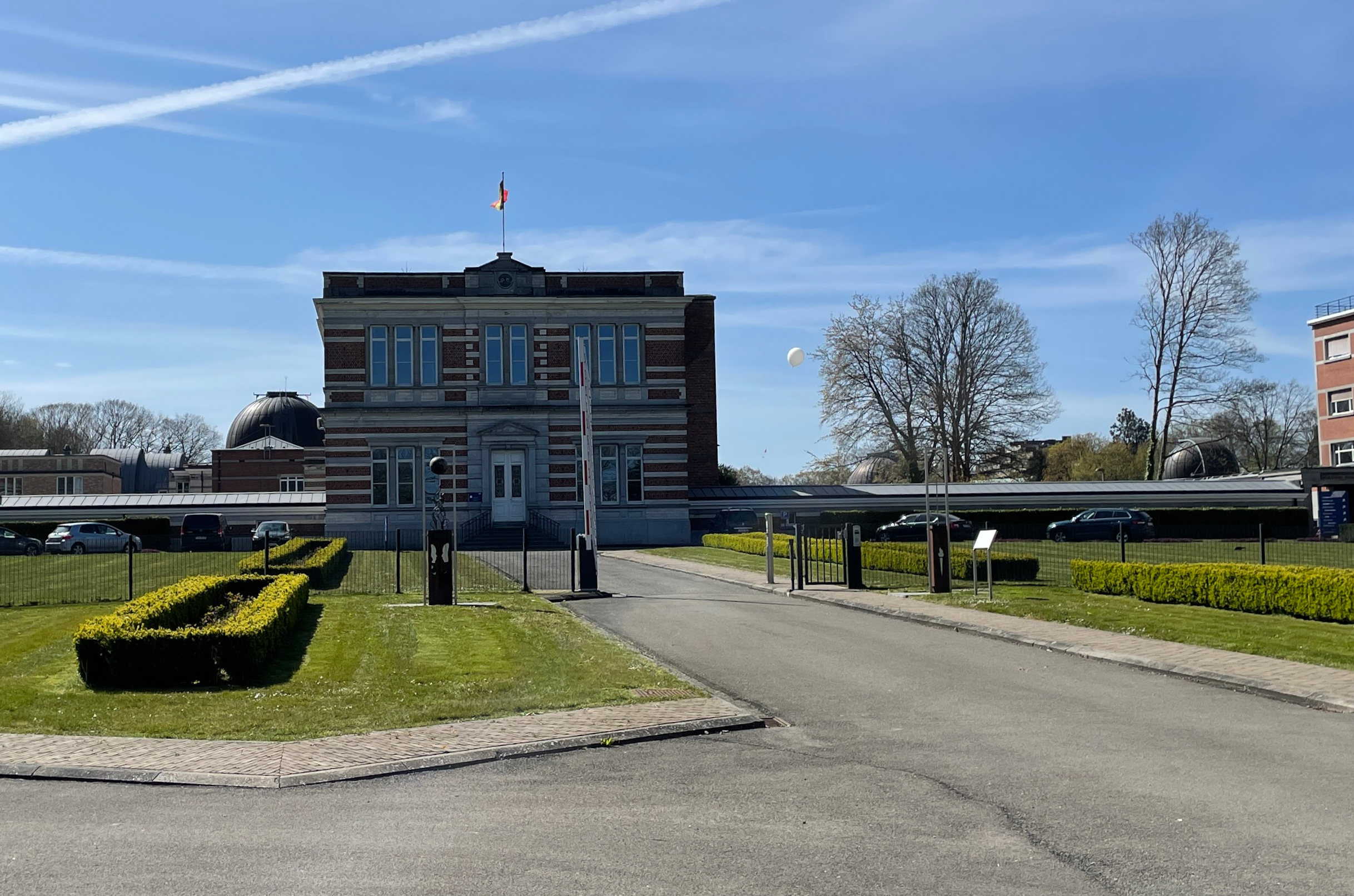
On Thursday, April 22, our team was among the few allowed to participate in the balloon recovery mission. Departing from Dilsen around 08:45, we drove to the Royal Meteorological Institute in Uccle, where preparations were underway for the launch. As there were Coronavirus restrictions in place, we sadly couldn’t witness the launch from up close so we waited in front of the gates, setting up and testing our APRS tracking system.
At 11:55, Gondola A, carrying our weather station and UV experiment, was released, followed by Gondola B at 12:11, which contained our tracking payloads. Shortly after launch, we successfully received RTTY signals indicating proper transmission and GPS lock. Strong northerly winds carried the balloons toward Wallonia, and as they gained altitude, we temporarily lost signal contact over Brussels.
Launch of Asgard-X’s gondola A from the RMI in Uccle.
After roughly an hour, new GPS coordinates were received showing Gondola A had landed near Salet in Wallonia, close to the French border. A tracking beacon attached to the gondola by Erik de Schrijver allowed for a swift recovery. Gondola B was later found seven kilometers away.
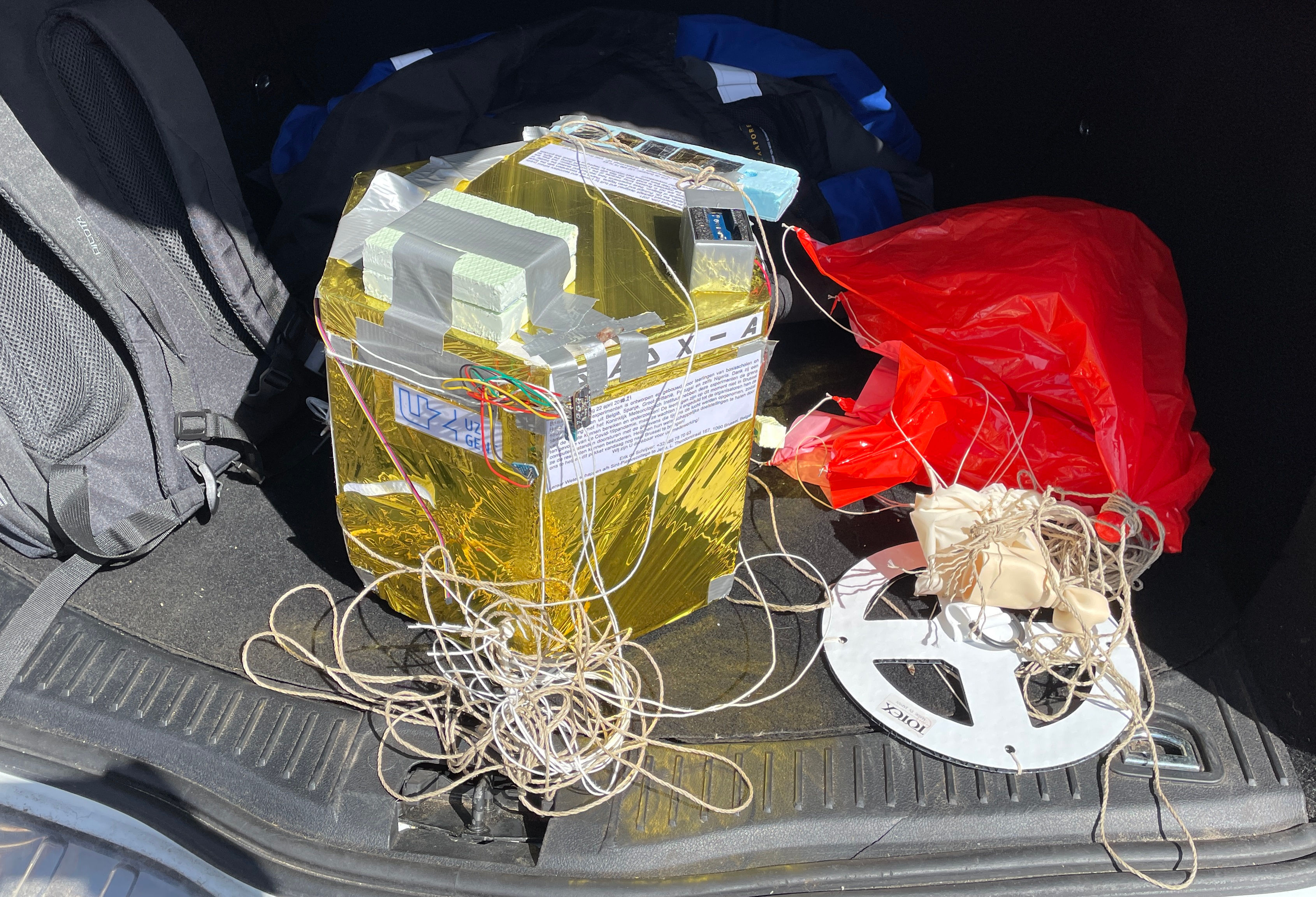 Recovered Asgard-X’s gondola A near Salet, Belgium.
Results
Both payloads were successfully recovered, allowing all participating teams to begin data analysis. Our UV sensor data showed clear attenuation patterns between the artificial and biological skin samples, consistent with expected absorption characteristics of the epidermal layer. Packet telemetry confirmed continuous operation of both RTTY and APRS systems throughout the flight.
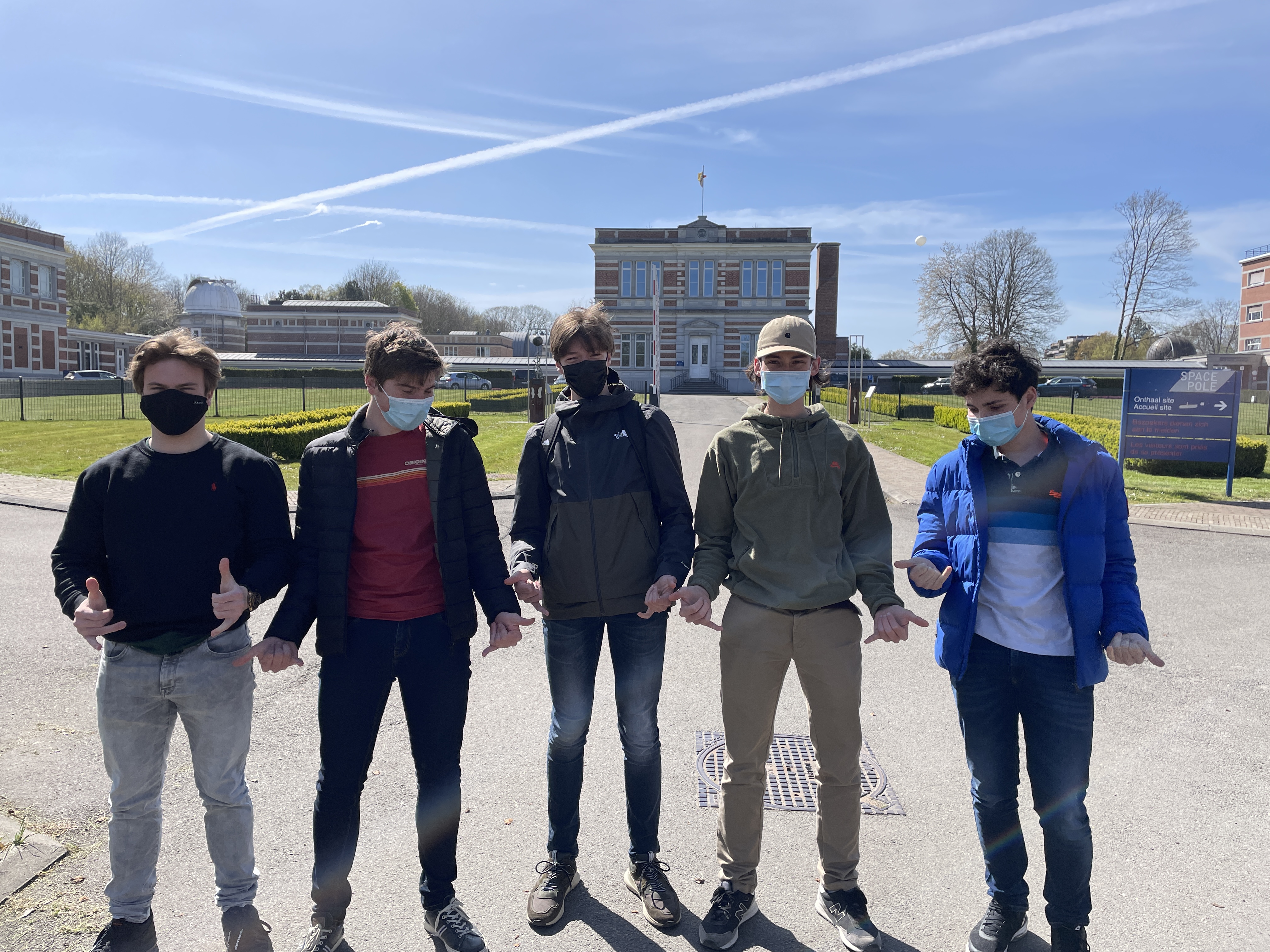 Student team picture at the Royal Meteorological Observatory.
Many thanks to the Royal Meteorological Observatory and Erik de Schrijver for organizing the Asgard campaign, and to teacher Dirk Geeroms who took me and fellow students Sander Camps, Giel Swenters along as well as the senior students Robin Gielkens and Lode Van Herck who guided us.